Product Mix
The product mix encompasses live, fresh, frozen, chilled, and shelf-stable seafood, reflecting a strategic response to evolving consumer demand for convenience and quality in Europe. In CY 2024, live, fresh, and chilled seafood accounted for ~21% of Europe's total effective consumption, frozen products dominated the market at ~45% share, whereas, dried, smoked, salted items represented ~18%, and other preserved or processed preparations comprised the remaining ~16%. These proportions have remained broadly consistent since CY 2019, when live, fresh, and chilled seafood also constituted ~21%, frozen products ~46%, dried, smoked, salted items ~18%, and other preparations ~16%.
Channel Evolution
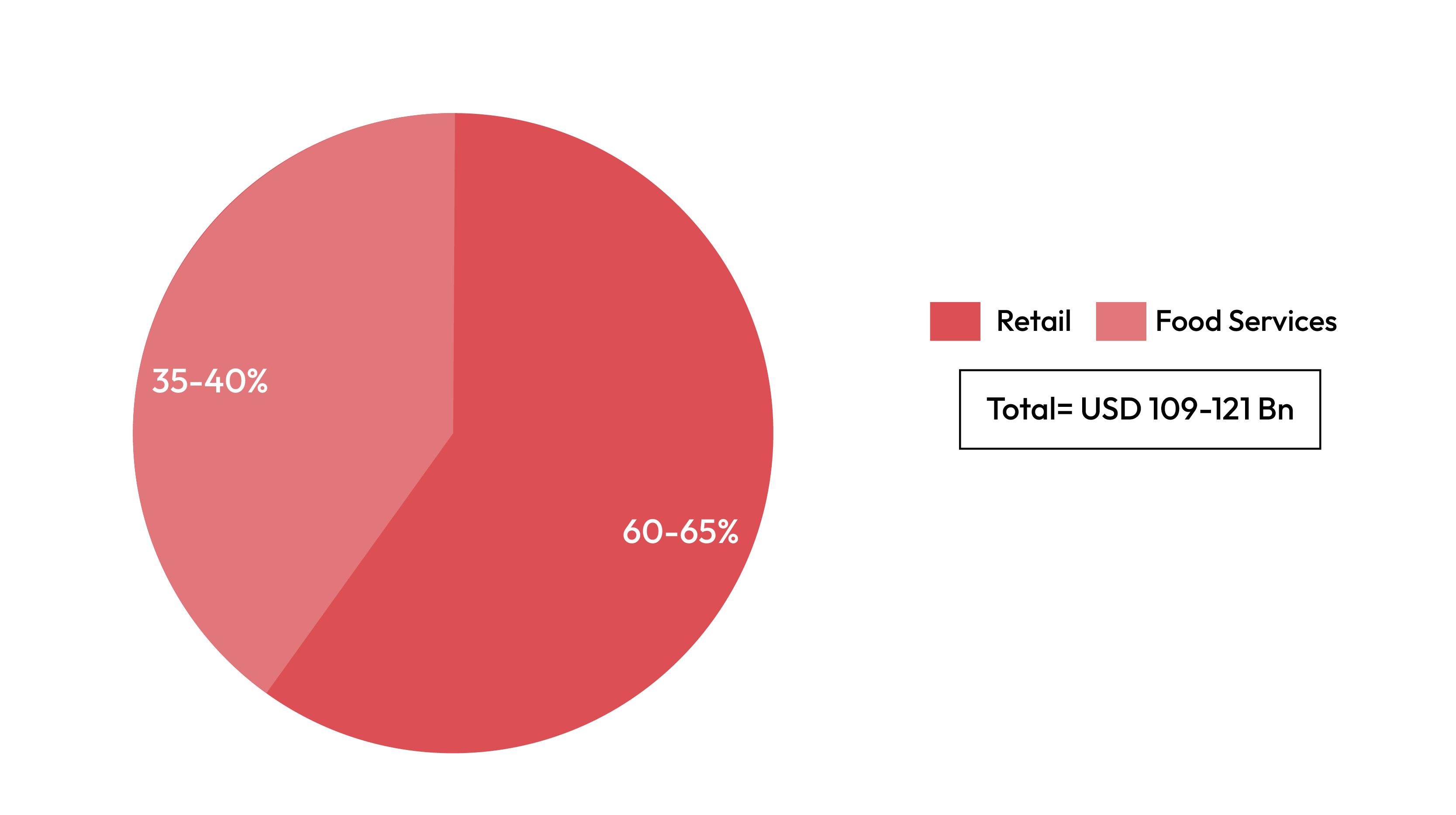
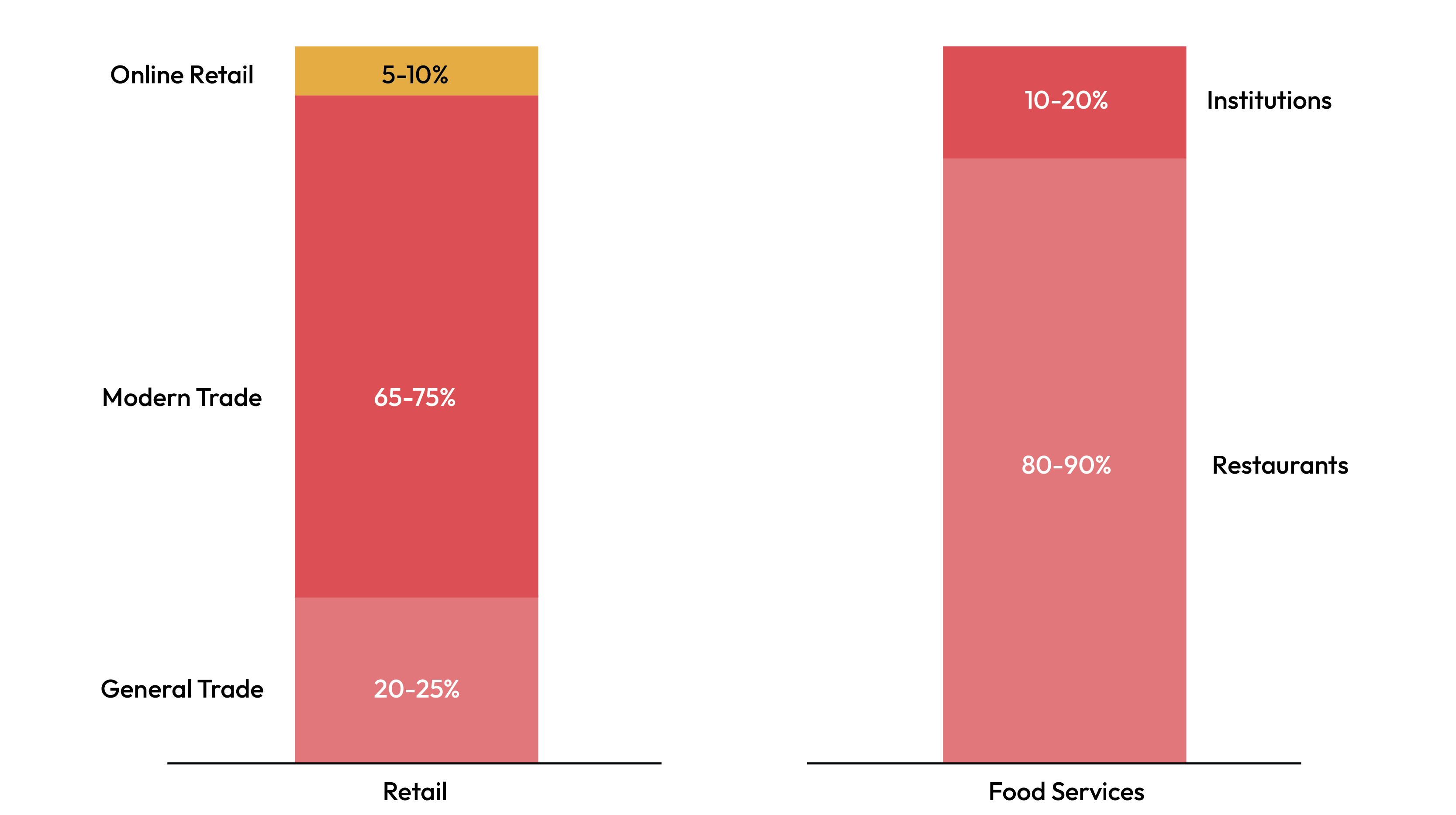
The market is primarily divided between retail and food services segments, with retail accounting for 60-65% of the total market value in CY 2024. Within the retail segment, modern trade channels (including supermarkets and hypermarkets) account for 65-75% of the market, while traditional independent outlets represent 20-25%, and online retail comprises 5-10%. In the food services segment, restaurants hold 80-90% of the market share, with institutional buyers constituting the remaining 10-20%.
Changing consumer behaviour
European seafood consumption is shaped by regional preferences, economic factors, and a strong emphasis on sustainability. In Southern Europe, countries like Spain, Italy, and France have a deep-rooted seafood culture, with a preference for fresh fish, shellfish, and traditional preparations. Meanwhile, Northern and Western Europe, including Germany, the Netherlands, and Scandinavia, favour premium seafood like salmon and cod, often in smoked, frozen, or ready-to-eat formats. Across the continent, sustainability remains a key priority, with consumers actively seeking eco-certified seafood and retailers promoting traceable, responsibly sourced options. However, economic pressures and inflation are influencing purchasing behaviour, leading to a shift toward cost-effective and long-lasting seafood formats without compromising on quality.
Source(s): Redseer Industry Report